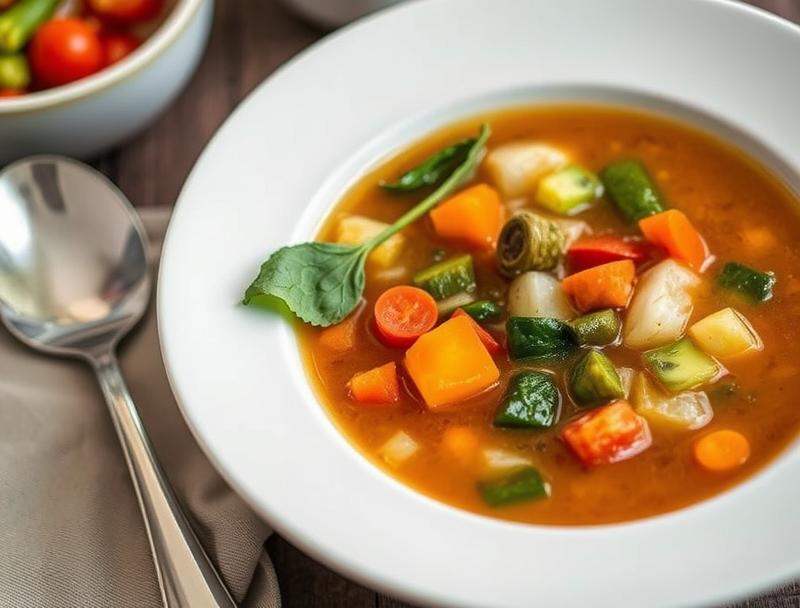
Vegetable Soup
Introduction
Vegetable soup is a dish that embodies the essence of simplicity, flavor, and creativity, all while utilizing everyday ingredients that are readily available in most kitchens. This hearty and comforting soup is a masterpiece of balance, bringing together a variety of vegetables, broth, and sometimes beans or grains, to create a meal that is not only delicious but also nutritious. Whether you’re looking for a quick weeknight dinner, a healthy lunch option, or a comforting remedy for a chilly day, vegetable soup is the perfect choice. Its ease of preparation, impressive results with minimal effort, and the endless possibilities for customization make it a favorite among cooks of all levels.
Why This Works
- Flavor balance and ingredient accessibility: The beauty of vegetable soup lies in its ability to balance a wide range of flavors and textures, making it accessible and enjoyable for everyone. You can use whatever vegetables are in season, ensuring freshness and variety.
- Ease of preparation: One of the most appealing aspects of vegetable soup is how easy it is to prepare. Simply chop your vegetables, sauté them in a pot, add broth and your choice of additional ingredients, and let it simmer until everything is tender.
- Impressive results with minimal effort: Despite its simplicity, vegetable soup can yield impressive results. The slow cooking process brings out the deep, rich flavors of the vegetables and broth, creating a dish that is both comforting and sophisticated.
Ingredients
- 2 tablespoons olive oil
- 1 onion, chopped
- 3 cloves garlic, minced
- 2 carrots, peeled and chopped
- 2 celery stalks, chopped
- 2 potatoes, peeled and chopped
- 1 large can of diced tomatoes
- 4 cups vegetable broth
- 1 teaspoon dried thyme
- 1/2 teaspoon dried basil
- Salt and pepper, to taste
- Fresh parsley or basil, chopped (for garnish)
Instructions
- Step 1: Begin by heating the olive oil in a large pot over medium heat. Add the chopped onion and sauté until it becomes translucent, about 5 minutes.
- Step 2: Add the minced garlic, chopped carrots, and chopped celery to the pot. Continue to sauté for another 5 minutes, stirring occasionally, until the vegetables start to soften.
- Step 3: Add the chopped potatoes, diced tomatoes, vegetable broth, dried thyme, and dried basil to the pot. Season with salt and pepper to taste. Bring the mixture to a boil, then reduce the heat to low and let it simmer for 20-25 minutes, or until the vegetables are tender.
- Step 4: Once the soup is ready, taste and adjust the seasoning if necessary. Serve hot, garnished with chopped fresh parsley or basil.
Handy Tips
- Use a variety of colorful vegetables to make the soup visually appealing. Consider adding bell peppers, zucchini, or kale to the pot.
- For a creamier soup, you can add a tablespoon or two of heavy cream or coconut cream towards the end of the cooking time.
- Experiment with different spices and herbs to change up the flavor profile of the soup. Paprika, cumin, or chili powder can add a nice depth of flavor.
Heat Control
When cooking vegetable soup, it’s essential to control the heat to prevent the vegetables from becoming mushy or the broth from boiling away. Start with medium heat to sauté the vegetables, then reduce the heat to low once you add the broth and let it simmer. This gentle heat will help to cook the vegetables evenly and prevent the soup from burning.
Crunch Factor
The texture of vegetable soup can vary depending on your preference. If you like a bit of crunch, consider adding some chopped fresh vegetables like bell peppers or carrots towards the end of the cooking time. This way, they will retain some of their texture and add a nice contrast to the softness of the other vegetables.
Pro Kitchen Tricks
- Use a slow cooker: If you have a busy day ahead, consider making your vegetable soup in a slow cooker. Simply sauté the vegetables in a pan, then transfer everything to the slow cooker and let it cook on low for 6-8 hours.
- Roast your vegetables: For added depth of flavor, roast some of your vegetables in the oven before adding them to the soup. This works particularly well for carrots, celery, and onions.
- Make it ahead: Vegetable soup is a great make-ahead dish. Cook it a day or two in advance, then refrigerate or freeze it until you’re ready to serve.
Storage Tips
- Let the soup cool completely before refrigerating or freezing it. This will help to prevent the growth of bacteria and keep the soup fresh for longer.
- Refrigerate the soup for up to 3 days or freeze it for up to 3 months. When you’re ready to serve, simply thaw the soup overnight in the fridge or reheat it from frozen.
- Use airtight containers to store the soup, and consider portioning it out into individual servings for easy reheating.
Gift Packaging Ideas
Vegetable soup makes a wonderful gift, especially during the colder months. Consider packaging it in Mason jars or thermoses, and add a few crusty bread rolls or crackers on the side. You can also include a small bag of fresh herbs or a sprinkle of grated cheese for added flavor. Wrap the jar or thermos in a cozy blanket or tea towel, and add a gift tag with a personal message.
Flavor Variations
- Different spices: Experiment with different spice blends, such as curry powder, smoked paprika, or ground cumin, to add a unique flavor to your soup.
- Creative toppings: Add some creative toppings to your soup, such as a dollop of sour cream, a sprinkle of grated cheese, or a handful of chopped fresh herbs.
- Ingredient swaps: Swap out some of the ingredients to change up the flavor profile of the soup. Consider using different types of broth, such as chicken or beef broth, or adding some cooked beans or grains for added protein and fiber.
Troubleshooting
- Texture problems: If your soup is too thick, try adding a bit more broth or water. If it’s too thin, try simmering it for a few more minutes to reduce the liquid.
- Ingredient replacements: Don’t be afraid to substitute ingredients if you don’t have something on hand. For example, you can use dried herbs instead of fresh, or swap out one type of vegetable for another.
- Over/undercooking signs: Keep an eye on your soup as it cooks, and adjust the heat and cooking time as needed. If the vegetables are tender but the soup is still too thin, try simmering it for a few more minutes. If the soup is too thick, try adding a bit more broth or water.
FAQs
- Can I freeze it? Yes, vegetable soup freezes beautifully. Let it cool completely, then transfer it to an airtight container or freezer bag and store it in the freezer for up to 3 months.
- Is it gluten-free? Yes, this recipe is gluten-free, making it a great option for those with gluten intolerance or sensitivity. Just be sure to check the ingredients of your broth and any additional ingredients you add to ensure they are gluten-free.
- Can I double the recipe? Yes, you can easily double or triple this recipe to feed a larger crowd. Just be sure to use a large enough pot and adjust the cooking time as needed.
Conclusion
Vegetable soup is a dish that is sure to become a staple in your kitchen. Its ease of preparation, versatility, and delicious flavor make it a great option for any meal. Whether you’re cooking for one or a crowd, this recipe is sure to please. So go ahead, get creative with your ingredients, and enjoy a warm, comforting bowl of vegetable soup. Don’t be afraid to experiment and make the recipe your own, and be sure to share your favorite variations with friends and family. Happy cooking!
Vegetable Soup
A hearty and comforting vegetable soup made with a variety of colorful vegetables, broth, and herbs.
🥘 Ingredients
👩🍳 Instructions
-
1Heat oil in a large pot over medium heat. Add the chopped onion and sauté until it becomes translucent, about 5 minutes.
-
2Add the minced garlic, chopped carrots, and chopped celery to the pot. Continue to sauté for another 5 minutes, stirring occasionally, until the vegetables start to soften.
-
3Add the chopped potatoes, diced tomatoes, vegetable broth, dried thyme, and dried basil to the pot. Season with salt and pepper to taste. Bring the mixture to a boil, then reduce the heat to low and let it simmer for 20-25 minutes, or until the vegetables are tender.
-
4Taste and adjust the seasoning if necessary. Serve hot, garnished with chopped fresh parsley or basil.