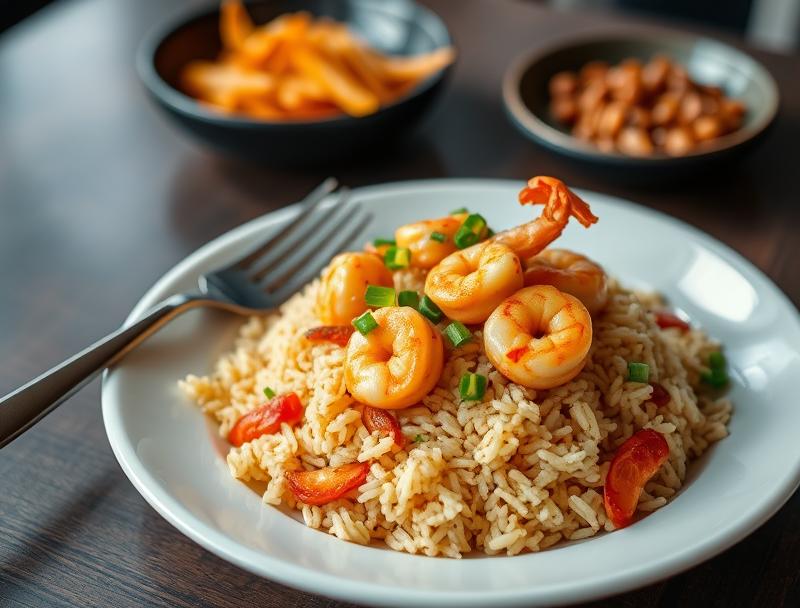
Hibachi Shrimp Fried Rice
Introduction
Hibachi Shrimp Fried Rice is a dish that embodies the perfect blend of ease, flavor, and creativity, all while utilizing everyday ingredients that you might already have in your pantry. This recipe is a masterclass in transforming simple elements into a culinary spectacle that will impress both family and friends. The beauty of Hibachi Shrimp Fried Rice lies in its versatility and the room it leaves for personalization, allowing you to experiment with different flavors and ingredients to make the dish truly your own. Whether you’re a seasoned chef or a beginner in the kitchen, this recipe is sure to delight with its combination of succulent shrimp, aromatic spices, and the satisfying crunch of fresh vegetables, all perfectly balanced within a bed of fluffy fried rice.
Why This Works
- Flavor balance and ingredient accessibility: The key to a great Hibachi Shrimp Fried Rice is achieving a perfect balance of flavors, from the savory umami of soy sauce to the sweetness of the shrimp, all of which can be easily found in most grocery stores.
- Ease of preparation: Despite its impressive presentation and complex flavors, this dish is remarkably easy to prepare, requiring minimal specialized equipment and straightforward steps that can be followed by cooks of all skill levels.
- Impressive results with minimal effort: One of the most appealing aspects of Hibachi Shrimp Fried Rice is the disproportionate return on investment – with relatively little time and effort, you can produce a dish that looks and tastes like it was prepared in a high-end restaurant.
Ingredients
- 1 cup large shrimp, peeled and deveined
- 2 tablespoons vegetable oil
- 1 small onion, diced
- 2 cloves garlic, minced
- 1 cup mixed vegetables (e.g., peas, carrots, corn)
- 2 cups cooked rice (preferably day-old rice)
- 2 teaspoons soy sauce
- 1 teaspoon oyster sauce (optional)
- 1 teaspoon sesame oil
- Salt and pepper, to taste
- 2 eggs, beaten (for egg ribbons)
- Scallions, chopped (for garnish)
Instructions
- Step 1: Begin by preparing your ingredients. Chop the onion and scallions, mince the garlic, and ensure your shrimp are peeled and deveined. Beat the eggs in a separate bowl and set aside.
- Step 2: Heat 1 tablespoon of vegetable oil in a large skillet or wok over medium-high heat. Add the shrimp and cook until they turn pink, about 2-3 minutes per side. Remove the shrimp from the skillet and set aside.
- Step 3: In the same skillet, add the remaining 1 tablespoon of vegetable oil. Add the diced onion and minced garlic and stir-fry until the onion is translucent. Then, add the mixed vegetables and cook until they are tender-crisp.
- Step 4: Push the vegetables to one side of the skillet. Pour a little more oil into the empty side if necessary, then add the beaten eggs. Scramble the eggs until they are cooked through, breaking them into small pieces as they cook. Mix the eggs with the vegetables.
- Step 5: Add the cooked rice to the skillet, breaking up any clumps with a spatula. Stir-fry the rice with the vegetables and eggs, ensuring everything is well combined. Add the soy sauce, oyster sauce (if using), and sesame oil. Stir-fry for about 2 minutes, until the rice is heated through and starting to brown.
- Step 6: Return the cooked shrimp to the skillet and stir-fry everything together for another minute, until the shrimp are well coated with the sauce and the rice is evenly colored.
- Step 7: Taste and adjust the seasoning with salt, pepper, and more soy sauce if needed. Transfer the Hibachi Shrimp Fried Rice to a serving platter or individual plates. Garnish with chopped scallions and serve immediately.
Handy Tips
- Use day-old rice to make the best fried rice, as it dries out a bit and fries up nicer. Freshly cooked rice is too moist and sticky, which can make the dish clumpy.
- Customize your mixed vegetables based on what’s in season and your personal preferences. Other options include diced bell peppers, chopped mushrooms, or sliced zucchini.
- For an extra crispy bottom on your fried rice, known as a “crust” in some fried rice recipes, press the rice mixture into the bottom of the skillet or wok and cook for an additional 2-3 minutes without stirring, until the bottom layer is golden brown and crispy.
Heat Control
Heat control is crucial when making Hibachi Shrimp Fried Rice. You want to start with a medium-high heat to quickly cook the shrimp and sear the vegetables, but be prepared to adjust the heat as needed to prevent burning, especially when adding the rice and sauces. A good rule of thumb is to reduce the heat to medium once you add the rice to prevent it from burning or browning too quickly. Keep an eye on the dish and adjust the heat up or down to achieve the perfect stir-fry.
Crunch Factor
Achieving the right crunch factor in Hibachi Shrimp Fried Rice can elevate the dish from good to great. This crunch comes from several components: the crispy bottom layer of the rice if you choose to make it, the tender-crisp vegetables, and the satisfying bite of the shrimp. To ensure your vegetables retain some crunch, don’t overcook them – they should still have a bit of firmness when you bite into them. For the shrimp, cooking them just until they turn pink ensures they stay juicy and tender on the inside while providing a nice textural contrast.
Pro Kitchen Tricks
- Prep all your ingredients before starting to cook. This ensures that once you begin stir-frying, you can focus on cooking without interruptions, which is crucial for achieving the right textures and flavors.
- Use a wok if you have one. The shape of a wok allows for efficient stir-frying, as it can handle high heat and quickly cooks ingredients evenly. If not, a large skillet will suffice.
- Don’t overmix the rice. While you want everything to be well combined, overmixing can make the rice clumpy and sticky. Stop stir-frying once the ingredients are just combined, and let the dish rest for a minute before serving to allow the flavors to meld together.
Storage Tips
- Leftover Hibachi Shrimp Fried Rice can be stored in the refrigerator for up to 3 days. Cool the rice to room temperature before refrigerating to prevent bacterial growth.
- To reheat, add a tablespoon of water to the rice and heat it in a skillet or wok over low heat, stirring constantly, until the rice is warmed through and fluffy again. Alternatively, you can reheat it in the microwave, adding a splash of water and covering the dish to prevent drying out.
- Freezing is not recommended for fried rice, as the texture can become unappealingly mushy upon thawing. However, if you must freeze, make sure the rice is completely cool, then transfer it to an airtight container or freezer bag, pressing out as much air as possible before sealing. Frozen fried rice is best reheated in a skillet or wok with a bit of oil to revive its texture.
Gift Packaging Ideas
Hibachi Shrimp Fried Rice is typically a dish best served immediately, but if you’re looking to share some with friends or family, consider packaging it in microwave-safe containers that can be easily reheated. Garnish with fresh scallions and a fortune cookie on the side for a fun touch. For a more elaborate gift, prepare the ingredients separately (e.g., cook the shrimp, prepare the vegetables, and portion the rice) and package them in a gift basket along with a recipe card, allowing the recipient to assemble and cook the dish themselves.
Flavor Variations
- 🌟 Different spices: Add some heat with red pepper flakes, or try a smoky flavor with a bit of chipotle pepper in adobo sauce.
- 🌟 Creative toppings: Offer additional toppings on the side, such as diced green onions, sliced almonds, pickled ginger, or a fried egg, to let your diners customize their meal.
- 🌟 Ingredient swaps: Substitute chicken or tofu for the shrimp to cater to different dietary preferences or restrictions. You can also experiment with different types of rice, such as jasmine or basmati, for unique flavor profiles.
Troubleshooting
- Texture problems: If your fried rice turns out too dry, it might be because the rice was overcooked or too old. Too wet or clumpy? The rice might have been too fresh or not enough oil was used during stir-frying.
- Ingredient replacements: If you can’t find certain ingredients, don’t be afraid to substitute. For example, if you can’t find oyster sauce, a combination of soy sauce and hoisin sauce can provide a similar depth of flavor.
- Over/undercooking signs: Pay attention to the color and texture of your ingredients. Shrimp should be pink and firm to the touch, vegetables should be tender but still crisp, and the rice should be heated through and slightly browned in places.
FAQs
- Can I freeze it? While not recommended due to texture changes, you can freeze Hibachi Shrimp Fried Rice if you follow proper cooling and packaging procedures.
- Is it gluten-free? This recipe can be gluten-free if you ensure your soy sauce and oyster sauce (if used) are gluten-free. Always check the labels of your ingredients.
- Can I double the recipe? Yes, you can easily double or triple this recipe for larger groups. Just be sure to use a large enough skillet or wok to accommodate all the ingredients and to not overcrowd the pan, which can lead to uneven cooking.
Conclusion
With its vibrant colors, enticing aromas, and satisfying flavors, Hibachi Shrimp Fried Rice is a dish that is sure to become a staple in your culinary repertoire. Its ease of preparation, flexibility in ingredients, and impressive presentation make it perfect for both everyday meals and special occasions. Don’t be afraid to experiment and make this recipe your own, and enjoy the process of creating something truly delicious and memorable. Whether you’re cooking for one or for a crowd, Hibachi Shrimp Fried Rice is a recipe that promises to delight and inspire, inviting you to explore the wonderful world of culinary possibilities.
Hibachi Shrimp Fried Rice
A flavorful and easy-to-make dish combining succulent shrimp, mixed vegetables, and fried rice, perfect for any occasion.
🥘 Ingredients
👩🍳 Instructions
-
1Prepare all ingredients by chopping, dicing, and mincing as necessary.
-
2Cook the shrimp in a skillet or wok over medium-high heat until pink, then set aside.
-
3Add more oil to the skillet if necessary, then stir-fry the diced onion and minced garlic until the onion is translucent.
-
4Add the mixed vegetables and cook until they are tender-crisp.
-
5Push the vegetables to one side, then add a little more oil if needed and pour in the beaten eggs. Scramble the eggs until they are cooked through, breaking them into small pieces as they cook. Mix the eggs with the vegetables.
-
6Add the cooked rice to the skillet, breaking up any clumps with a spatula. Stir-fry the rice with the vegetables and eggs, ensuring everything is well combined. Add soy sauce, oyster sauce, and sesame oil, and stir-fry for about 2 minutes, until the rice is heated through and starting to brown.
-
7Return the cooked shrimp to the skillet and stir-fry everything together for another minute, until the shrimp are well coated with the sauce and the rice is evenly colored.
-
8Taste and adjust the seasoning as needed, then transfer the Hibachi Shrimp Fried Rice to a serving platter or individual plates. Garnish with chopped scallions and serve immediately.