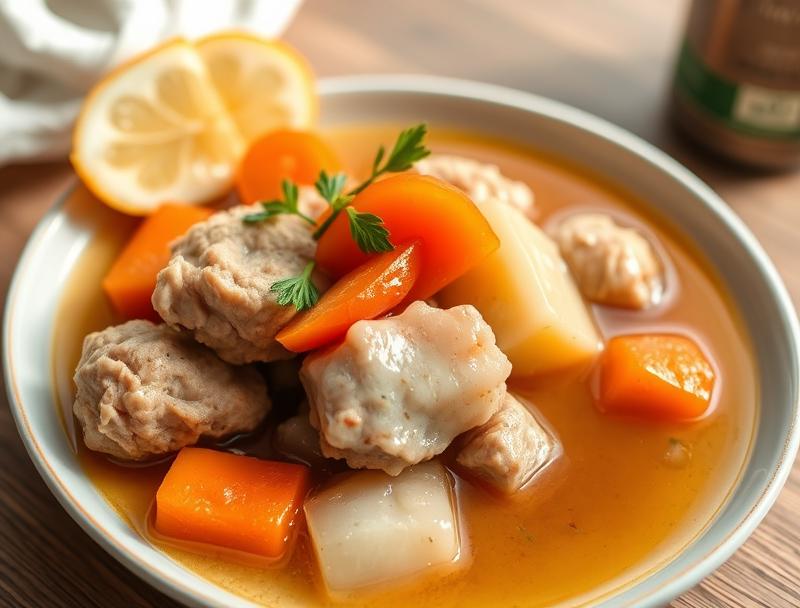
Turkey Stock
Introduction
Turkey stock is a fundamental component in many savory dishes, from soups to sauces, and is surprisingly easy to make at home. With just a few everyday ingredients, you can create a rich, flavorful base that elevates any meal. The beauty of homemade turkey stock lies in its versatility and the depth of flavor it adds to a variety of recipes. Whether you’re a seasoned chef or a beginner in the kitchen, making your own turkey stock is a simple and rewarding process that encourages creativity and experimentation with different ingredients and seasonings.
Why This Works
- Flavor balance and ingredient accessibility: The combination of turkey, vegetables, and aromatics creates a well-balanced flavor profile that is both hearty and refined, using ingredients that are readily available in most supermarkets.
- Ease of preparation: Despite its rich flavor, turkey stock is incredibly easy to prepare, requiring minimal active cooking time and effort, making it a great addition to any meal prep routine.
- Impressive results with minimal effort: The process of making turkey stock is straightforward and forgiving, yielding impressive results even for those with limited cooking experience, perfect for special occasions or everyday meals.
Ingredients
- 2 lbs turkey wings or necks
- 2 carrots, chopped
- 2 celery stalks, chopped
- 2 cloves garlic, minced
- 2 sprigs fresh thyme
- 1 bay leaf
- 1 large onion, chopped
- 6 quarts water
- Salt and pepper, to taste
- Optional: Other vegetables like leeks, parsley, or peppercorns for added depth of flavor
Instructions
- Step 1: Preheat your oven to 400°F (200°C). Place the turkey wings or necks on a baking sheet and roast in the oven for about 30 minutes, or until they are nicely browned. This step enhances the flavor and color of the stock.
- Step 2: In a large stockpot, sauté the chopped onion, carrots, and celery in a little bit of oil over medium heat until they are softened and lightly browned. Add the minced garlic and cook for another minute, stirring constantly to prevent burning.
- Step 3: Add the browned turkey, thyme, bay leaf, and any optional vegetables to the stockpot. Pour in the water, making sure that all the ingredients are covered. Bring the mixture to a boil, then reduce the heat to low and simmer, covered, for 6-24 hours. The longer it simmers, the richer the stock will be.
- Step 4: Strain the stock through a fine-mesh sieve into a large container or several smaller ones. Discard the solids. Let the stock cool, then refrigerate or freeze it for later use. Before using, skim off any fat that has risen to the top and season with salt and pepper to taste.
Handy Tips
- For a clearer stock, avoid stirring or disturbing the pot too much during the simmering process, and always skim off any impurities that rise to the surface.
- Consider making stock in large batches and freezing it in ice cube trays for easy access to small amounts whenever a recipe calls for it.
- Experiment with different vegetables and aromatics to create unique flavor profiles tailored to specific dishes or cuisines.
Heat Control
Maintaining the right temperature is crucial when making turkey stock. After bringing the mixture to a boil, reduce the heat to a simmer, aiming for a temperature between 180°F and 190°F (82°C to 88°C). This low heat helps to extract flavors from the ingredients without breaking down the collagen in the meat, which can make the stock cloudy.
Crunch Factor
Turkey stock itself is a liquid and does not have a crunch factor. However, the clarity and richness of the stock can significantly impact the texture of dishes it’s used in. For example, a clear stock can help maintain the crunch of vegetables in soups or stews, while a rich stock can add body and tenderness to sauces and braising liquids.
Pro Kitchen Tricks
- Use a mix of meat and bones for a more complex flavor. If using raw bones, be sure to blanch them first to remove impurities.
- Acidity, like a splash of vinegar or lemon juice, can help extract minerals from the bones, but use it sparingly to avoid altering the stock’s flavor profile.
- For a golden, rich stock, roast the bones and vegetables in the oven before simmering, as described in Step 1 of the instructions.
Storage Tips
- Cool the stock to room temperature, then refrigerate or freeze. Stock can be safely stored in the fridge for up to 5 days or frozen for up to 6 months.
- When freezing, consider dividing the stock into smaller portions (like ice cube trays) for convenience and to prevent having to thaw more than you need at one time.
- Before reheating frozen stock, it’s a good idea to skim off any fat that has solidified on the surface for a cleaner flavor.
Gift Packaging Ideas
Homemade turkey stock can be a thoughtful and practical gift for friends and family, especially during the holidays or for those who enjoy cooking. Consider packaging it in decorative glass jars or containers, sealed tightly and labeled with the date and ingredients. You could also include a few recipe ideas or suggestions for using the stock, making it a more personal and engaging gift.
Flavor Variations
- Different spices: Add a few whole spices like peppercorns, cloves, or allspice to the pot for unique flavor notes.
- Creative toppings: When using the stock in soups or stews, consider adding fresh herbs, a dollop of sour cream, or some crusty bread for added texture and flavor.
- Ingredient swaps: Use chicken or beef bones for a different stock flavor, or add other vegetables like mushrooms, leeks, or parsnips for added depth.
Troubleshooting
- Texture problems: If your stock turns out cloudy, it may be due to stirring the pot too much or not skimming off impurities. For a clearer stock, try to minimize disturbance during simmering and always skim the surface.
- Ingredient replacements: If you don’t have turkey wings or necks, you can substitute with other poultry bones or even beef or pork for a different flavor profile.
- Over/undercooking signs: The stock is done when it has reached your desired richness and flavor. If it’s undercooked, it might taste weak or lack depth. Overcooking can result in a bitter taste, so it’s essential to taste and adjust as you go.
FAQs
- Can I freeze it? Yes, turkey stock freezes very well. Cool it to room temperature, then pour it into airtight containers or freezer bags, making sure to remove as much air as possible before sealing.
- Is it gluten-free? Yes, homemade turkey stock is naturally gluten-free, making it a great base for gluten-free soups, stews, and sauces.
- Can I double the recipe? Absolutely, you can easily double or triple the recipe if you have a large enough pot. Just be sure to adjust the cooking time slightly, as a larger quantity may take a bit longer to simmer.
Conclusion
Homemade turkey stock is a versatile and flavorful base that can elevate a wide range of dishes, from comforting soups to rich sauces. With its ease of preparation, impressive results, and the potential for creativity and experimentation, making your own turkey stock at home is a rewarding culinary adventure. Whether you’re a seasoned cook or just starting to explore the world of cooking, this simple yet powerful ingredient is sure to become a staple in your kitchen, inviting you to explore new recipes and flavors with confidence and joy.
Turkey Stock
A rich and flavorful homemade stock made with turkey, vegetables, and aromatics, perfect for soups, sauces, and more.
🥘 Ingredients
👩🍳 Instructions
-
1Roast the turkey wings or necks in the oven at 400°F (200°C) for about 30 minutes, or until nicely browned.
-
2Sauté the chopped onion, carrots, and celery in a little oil over medium heat until softened and lightly browned. Add the garlic and cook for another minute.
-
3Add the browned turkey, thyme, bay leaf, and any optional vegetables to the pot. Pour in the water, covering all ingredients. Bring to a boil, then reduce heat to low and simmer, covered, for 6-24 hours.
-
4Strain the stock through a fine-mesh sieve into a container. Discard the solids. Cool, then refrigerate or freeze for later use.